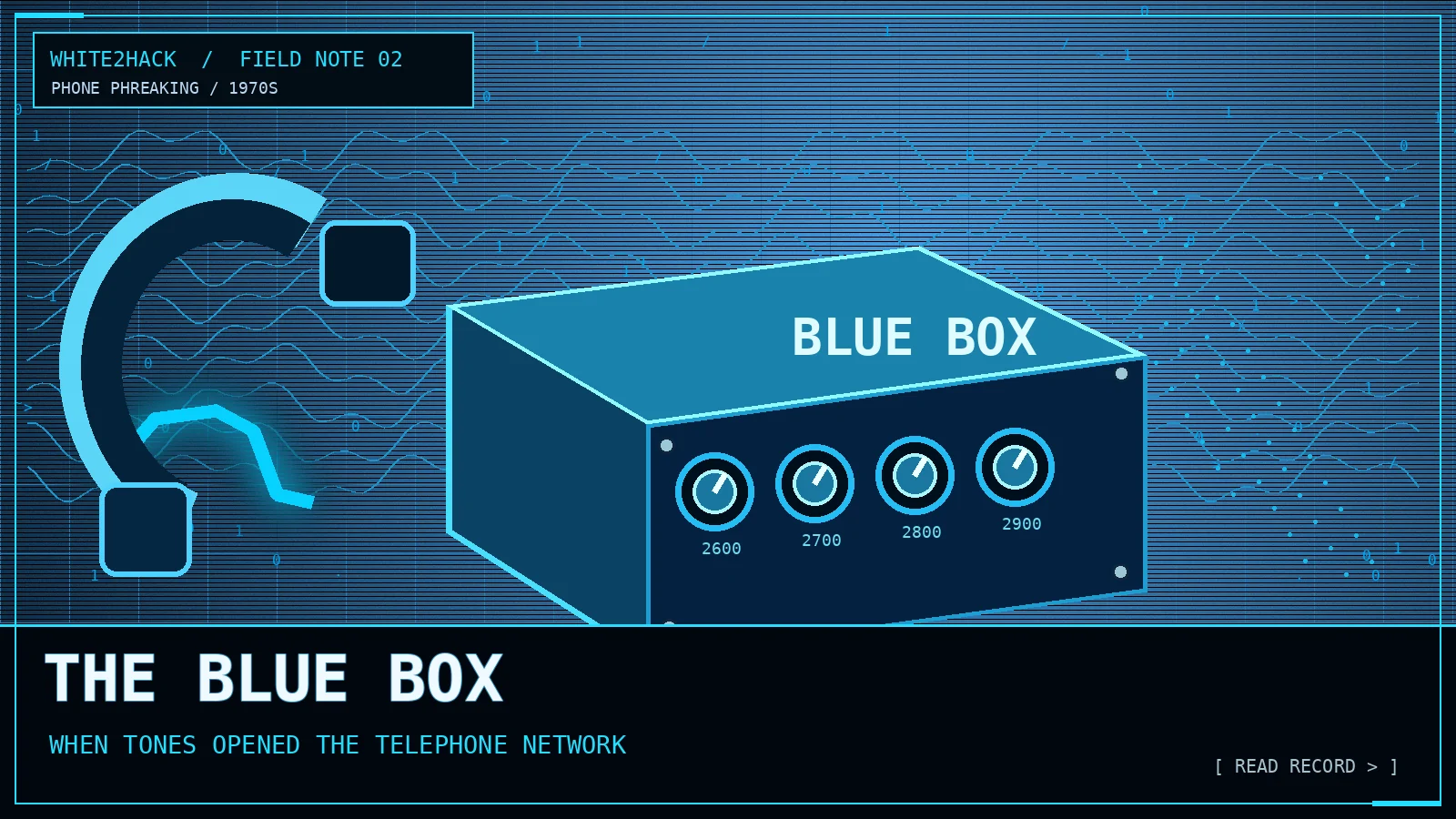
Before the web, some technically curious teenagers explored the phone system itself. A small electronic device called the “blue box” could reproduce signaling tones used by older long-distance networks. Its history is both a fascinating engineering story and a cautionary tale about insecure trust boundaries.
A system that trusted its own signals
Some historical telephone networks used in-band signaling: control information could travel over the same channel as a call. The design created an opening when an outsider could imitate tones the network expected to hear only from its own equipment. A blue box was a tone generator designed to take advantage of that weakness.
The distinction here is architectural. Security systems should not treat user-controlled data as if it were trusted control instructions. Modern applications face analogous problems when they confuse content with commands or fail to separate trust zones.
Wozniak, Jobs, and the early Apple story
Steve Wozniak built blue boxes and, together with Steve Jobs, used and sold them before they founded Apple. The Computer History Museum documents their early work and how the collaboration foreshadowed later roles: Wozniak building and Jobs helping bring a product to others. Using the devices for unauthorized free calls was illegal, regardless of the inventiveness involved.
The lesson behind the legend
The point is not to reproduce old phone-fraud techniques. It is to recognize a recurring design failure: when a system trusts signals from the wrong side of a boundary, an attacker may be able to influence privileged behavior. Separate control from content, validate assumptions at the right boundary, and monitor for anomalous usage.
Small tools can expose enormous assumptions. Responsible research should make those assumptions visible before they become incidents.